Tree Trimming Is More Than Cutting Branches
Good pruning is selective.
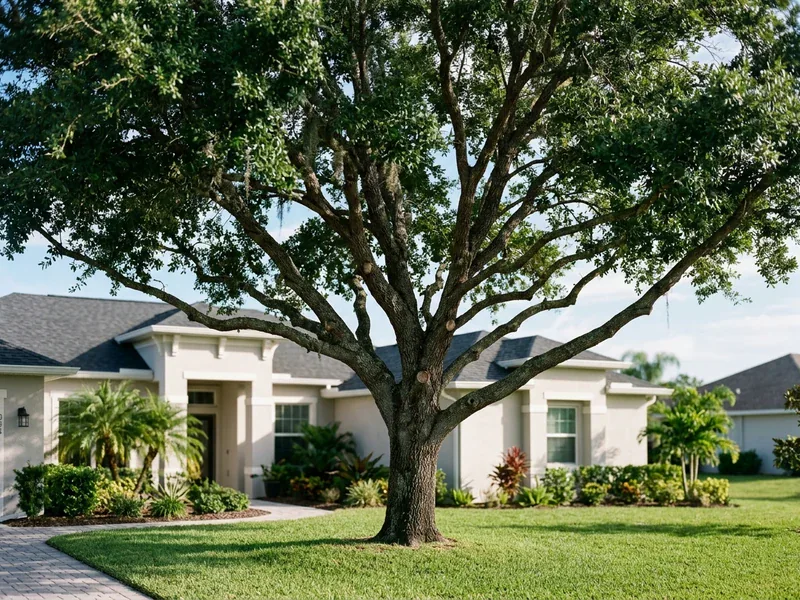
The goal is not simply to make a tree smaller or remove as much foliage as possible. Proper pruning may remove dead, damaged or poorly attached branches, improve structure or create necessary clearance while preserving as much healthy tree tissue as practical.
UF/IFAS warns that poor pruning practices can create weak regrowth and increase vulnerability to failure. Topping — cutting major stems back to stubs — is specifically discouraged.
Topping and aggressive overpruning stimulate rapid, weakly attached water sprouts that are significantly more prone to breaking in high winds. Professional pruning works with the natural branch collar architecture.
Why Trees May Need Trimming
Pruning decisions should be based on specific objective needs rather than an arbitrary calendar schedule:
Dead or Damaged Branches
Dead and broken branches can become falling hazards and should be evaluated, particularly over homes, driveways, sidewalks and other occupied areas.
Structural Pruning
Young and established trees can benefit from pruning designed to develop better branch structure rather than merely reduce canopy size.

Clearance
Branches interfering with roofs, buildings, streets or other infrastructure can require selective pruning.
Storm Preparation
Storm preparation means correcting real structural problems before the storm — not removing excessive amounts of foliage at the last minute.
Should Trees Be “Thinned Out” Before Hurricanes?
Excessive thinning is not a substitute for proper structural pruning.
UF/IFAS research emphasizes developing strong tree structure, avoiding topping and correcting defects over time. A tree that has been poorly pruned in the past can actually become more vulnerable to failure.
Palm Tree Trimming Is Different
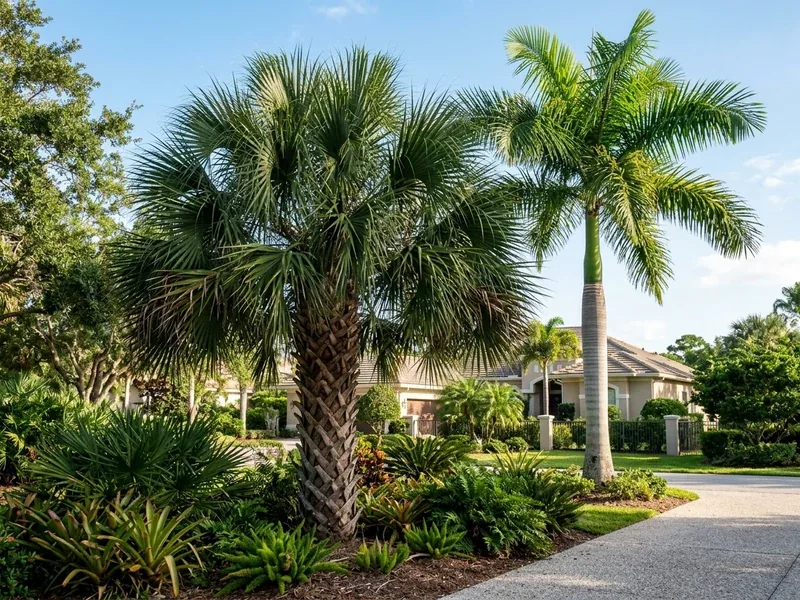
Palms should not be treated like ordinary branching trees.
UF/IFAS specifically warns against “hurricane cutting,” where many healthy fronds are removed before hurricane season. Research and observations after Florida hurricanes found that heavily overpruned palms could actually suffer greater crown failure than palms retaining fuller canopies.
Dead fronds and certain damaged material can be removed, but healthy green fronds normally should remain.
Tree Trimming Near Power Lines
Do not prune vegetation near overhead electric lines yourself.
FPL says specially trained line-clearance professionals should handle vegetation around power lines and advises property owners not to work within the hazardous area themselves.
High voltage lines present severe electrocution and arc flash hazards. Always contact Florida Power & Light (FPL) or hire utility-qualified line clearance specialists for trees within 10 feet of power lines.
Does Tree Trimming Require a Permit?
Requirements depend on the property and jurisdiction.
In unincorporated St. Lucie County, routine trimming or pruning that is not intended to kill vegetation is specifically excluded from the Notice of Vegetation Removal requirement.
Within the City of Port St. Lucie, tree-preservation rules vary with property type, protected-tree status and development context. If pruning could effectively destroy a protected tree or the property is commercial, public or within a PUD, confirm the applicable rules before work begins.
Read our complete Port St. Lucie Permit & Regulation Guide →
Frequently Asked Questions About Tree Trimming
How often should trees be trimmed in Florida?
There is no universal schedule for every tree. Species, age, structural condition and reason for pruning matter more than an arbitrary annual interval.
Is tree trimming the same as pruning?
In everyday use the terms overlap. In professional arboriculture, pruning generally refers to purposeful removal of selected branches to achieve a specific objective.
Should I hurricane-cut my palm trees?
No. UF/IFAS discourages this practice.
Can I trim branches near a power line?
Work near energized lines requires specially qualified professionals.